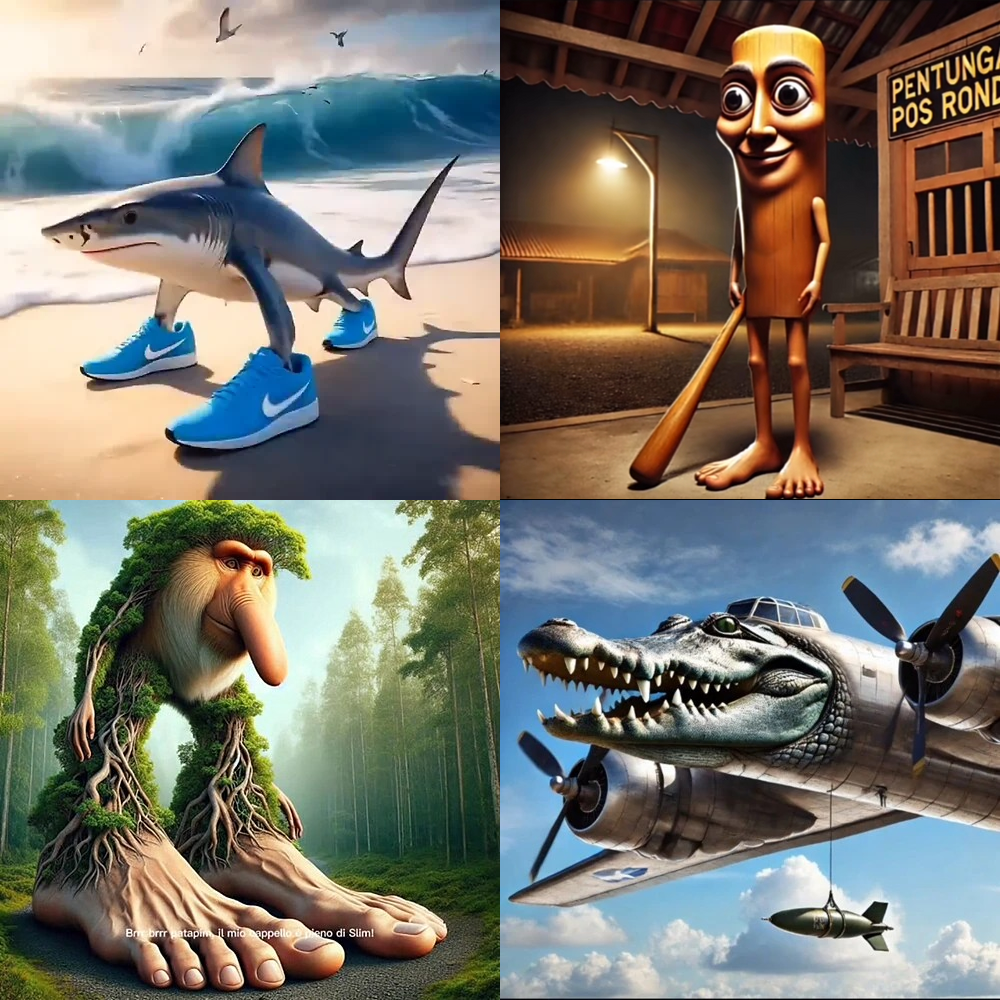
From Skibidi to Sahur: The Complete Brainrot Character Guide
In the ever-evolving landscape of internet culture, few phenomena have captured the collective digital consciousness quite like "brainrot." What began as a pejorative label for content deemed low-quality, bizarre, or hyper-stimulating has rapidly transformed into a badge of honor, a distinct genre, and a breeding ground for some of the most unforgettable Brain Rot Characters. These characters, often born from AI-generated absurdity, cultural mashups, and raw internet creativity, represent a new frontier in meme evolution. From the early, foundational days of Skibidi Toilet to the more recent, culturally-infused waves of Italian and Indonesian phenomena, this guide unravels the chaotic, humorous, and surprisingly complex universe of brainrot characters.
The Genesis: Skibidi, Sigma, and the Ohio Era (2023-2024)
Before the vibrant crocs and drumming sahurs, there was the original brainrot era, a foundational period spanning 2023 and 2024. This was when terms like "brainrot" cemented their place in internet lexicon, transitioning from dismissive slang to a descriptor of a burgeoning subculture. Characters from this period laid the groundwork for everything that followed, achieving lower "rarity" in the nascent Brainrot Games but boasting an irreplaceable cultural impact.
- Skibidi Toilet: Perhaps the most iconic progenitor, Skibidi Toilet — a series featuring singing heads emerging from toilets engaged in a bizarre war against camera-headed figures — exemplified the absurd, fast-paced, and highly repetitive nature that would define brainrot. It was chaotic, strangely compelling, and perfectly encapsulated the early essence of content designed to be consumed rapidly.
- Sigma Boy: A character archetype celebrating individualism, stoicism, and often, a somewhat detached, anti-social demeanor. Sigma memes, often accompanied by specific aesthetics and motivational quotes (often ironic), were a reaction to perceived mainstream "beta" behaviors, tapping into a desire for self-reliance and distinctiveness.
- Ohio Memes: Originating from ironic portrayals of Ohio as a bizarre, dystopian, or unusually dangerous place, these memes created an entire universe of surreal humor. While not always a specific character, the "Ohio" phenomenon itself acted as a character, embodying unexpected twists and a sense of shared, inside joke absurdity.
These early brainrot characters taught the internet a crucial lesson: content doesn't need traditional narrative or high production value to go viral. Its power lay in its immediate impact, its ability to be remixed, and its sheer, unadulterated strangeness.
The Italian Wave: Espresso Assassins and Pasta Dragons (Early 2025)
The internet, ever-hungry for new forms of absurdity, was ready for the next evolution. And then, like a freight train of cultural hilarity, the Italian wave hit in early 2025. The origin story is as simple as it is genius: someone posted a random crocodile, set it to dramatic Italian music, and gave it a completely fictitious, yet perfectly Italian-sounding, name. The internet collectively declared it the funniest thing ever.
Within weeks, the floodgates opened. Dozens of new Italian Brainrot Characters emerged, each more outlandish than the last. The formula was dead simple, yet endlessly effective:
- Take a random animal or food: Think crocodiles, sharks, pasta, or even an espresso machine.
- Give it a ridiculous, Italian-sounding name: The more over-the-top, the better.
- Pair it with dramatic, often operatic or classic Italian, music: This adds a layer of theatricality and mock grandeur.
- Often, introduce a subtly unsettling AI-generated aesthetic: The slightly off, uncanny valley look became a hallmark.
This template birthed characters like sharks in sneakers, espresso assassins, and pasta dragons, each existing in their own pocket of viral fame. The Italian brainrot phenomenon highlighted the internet's ability to take a simple concept, infuse it with cultural stereotypes (both affectionate and parodic), and turn it into a global sensation. It was a masterclass in AI-driven, absurd meme culture, proving that the blend of the familiar and the utterly bizarre was a recipe for virality.
The Global Expansion: From Tung Tung Tung Sahur to Collaborative Edits
Just when many thought brainrot might be an exclusively Western or Italian-centric phenomenon, Indonesian creators stepped up to prove the format’s universal appeal. The breakout character, Tung Tung Tung Sahur, was a testament to how local traditions could be seamlessly integrated into the brainrot template, creating something both culturally specific and globally resonant.
Tung Tung Tung Sahur is rooted in a real, cherished Ramadan tradition where drummers wake neighborhoods for the pre-dawn meal (sahur). By turning this tradition into a distinct brainrot character, Indonesian creators not only celebrated their own culture but also opened the floodgates for other Southeast Asian communities to bring their unique flavors to the template. This cross-cultural adoption demonstrated that the core appeal of brainrot – the absurd combination of elements, often with a cultural twist – transcended geographical boundaries.
What followed was an exciting period of cross-pollination. The crossover between Italian and Indonesian brainrot communities produced some of the wildest, most creative collaborative edits the internet has ever witnessed. Imagine an espresso assassin riding a pasta dragon, being serenaded by Tung Tung Tung Sahur, all set to a remixed Italian opera. These collaborations showcased the organic, decentralized nature of meme creation, where communities build upon each other’s innovations, creating a truly global tapestry of digital folklore.
Decoding the Appeal: Why Brainrot Characters Resonate
The enduring popularity of Brain Rot Characters isn't just a fluke; it's a reflection of deeper internet trends and psychological triggers. Here's why these bizarre figures have cemented their place in digital culture:
- Embrace of Absurdity: In an increasingly complex world, brainrot offers a refreshing escape into pure, unadulterated nonsense. There's no deep meaning to decipher, just chaotic fun.
- AI-Driven Novelty: Many brainrot characters are either directly generated by AI or heavily influenced by AI aesthetics. This introduces an uncanny, unpredictable element that human creativity alone might not achieve, making them uniquely captivating.
- Low Barrier to Entry: The "dead simple" formula means anyone with basic editing skills and an idea can contribute. This fosters a highly active, democratic, and rapidly evolving meme ecosystem.
- Relatability Through Irrelevance: Paradoxically, the sheer irrelevance and nonsensical nature of these characters make them universally relatable. They tap into a shared human appreciation for the utterly ridiculous.
- Community and Inside Jokes: Understanding and appreciating brainrot characters often comes with being part of a specific online community. This fosters a sense of belonging and shared humor, transforming dismissive labels into a badge of honor.
- Cultural Remixing: The Italian and Indonesian waves exemplify how brainrot can be a platform for cultural expression and playful appropriation, allowing users to celebrate and satirize cultural tropes in a lighthearted way.
The Brainrot Ecosystem: Beyond the Screen
The phenomenon of Brain Rot Characters extends beyond simple viral videos. A nascent ecosystem is rapidly developing around these figures, signifying their growing cultural footprint. Platforms like the "Brainrot Characters hub" are emerging, meticulously cataloging every Italian meme mascot, surfacing canon spellings, and archiving the lore surrounding each character. This organizational effort is crucial for a genre that thrives on chaotic, decentralized creation.
Furthermore, the emergence of "Brainrot Games" signifies a move towards interactive engagement. These games allow enthusiasts to jump from passive consumption to actively participating in the world of their favorite characters. Imagine battling a pasta dragon or teaming up with Tung Tung Tung Sahur in a game that directly pulls its assets and lore from the ever-expanding universe of brainrot content. This integration of lore into playable edits without losing context creates a holistic experience, deepening fan investment and ensuring the longevity of these characters.
Tips for Navigating the Brainrot Universe:
- Embrace the Chaos: Don't try to find logical sense. The beauty of brainrot lies in its absurdity.
- Pay Attention to Sound: Music and sound effects are crucial to brainrot character identities and their impact.
- Explore Cross-Cultural Examples: Dig into characters from different regions (like the Italian and Indonesian waves) to appreciate the global diversity of the genre.
- Check for Lore Hubs: Websites and communities dedicated to cataloging brainrot characters can help you understand backstories, canon, and variations.
- Consider Creating Your Own: The low barrier to entry means you too can experiment with the formula – combine an unexpected animal, a ridiculous name, and dramatic music, then see what sticks!
Conclusion
From the foundational absurdity of Skibidi Toilet to the culturally rich infusions of Italian and Indonesian phenomena, Brain Rot Characters have redefined what it means to be a viral sensation. They embody the internet's unique ability to generate, evolve, and globalize niche humor, often driven by AI and amplified by shared digital experiences. This guide has journeyed through their origins, celebrated their diversity, and dissected their undeniable appeal. As the digital landscape continues its relentless march forward, one thing is clear: the universe of brainrot characters, ever-evolving and always absurd, is here to stay, constantly pushing the boundaries of online creativity and reminding us that sometimes, the funniest things make no sense at all.