Explore All Brainrot Characters: Italian, Indonesian, & Original Lore
The internet is a vast ocean of information, and sometimes, amidst the structured data and insightful articles, you stumble upon something so delightfully absurd, so intentionally chaotic, that it earns a special place in the annals of digital culture: Brain Rot Characters. Far from being a derogatory term, "brainrot" has evolved into a badge of honor, signifying a subgenre of internet content that thrives on surrealism, unexpected humor, and often, a dash of AI-generated oddity. This comprehensive guide will take you on a journey through the origins and evolution of these fascinating entities, from their foundational roots to the vibrant Italian and Indonesian waves that have captivated millions.
The Genesis of Absurdity: Tracing the Original Brain Rot Characters (2023-2024)
Before the internet was flooded with espresso-sipping sharks and drum-beating mythical beasts, the concept of "brainrot" began as a dismissive label for content deemed low-effort, repetitive, or nonsensical. Yet, a curious cultural alchemy occurred between 2023 and 2024. Figures like the ubiquitous Skibidi Toilet, the stoic Sigma Boy, and the entire ecosystem of Ohio memes emerged, transforming "brainrot" from an insult into a descriptor of a burgeoning, highly engaging meme subculture. These early Brain Rot Characters, while perhaps considered "lower rarity" in any hypothetical meta-game, are culturally irreplaceable. They laid the groundwork, demonstrating the internet's insatiable appetite for content that defies conventional logic, embracing the bizarre and the unexpected. Their appeal lay in their simplicity, their instant recognizability, and their ability to generate an almost hypnotic, repetitive engagement. This period proved that sometimes, the funniest things are the ones that make the least sense, fostering a community that finds joy in shared absurdity.
The Italian Invasion: When Absurdity Met Amore (Early 2025)
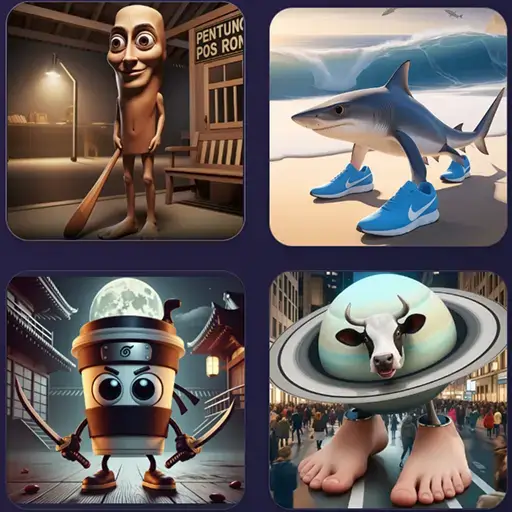
Just as the digital landscape seemed settled, a new wave hit with the force of a tarantella-fueled espresso shot: Italian Brainrot. The phenomenon exploded in early 2025, sparked by a seemingly innocuous yet brilliant act of internet creation. Someone, somewhere, animated a crocodile, set it to dramatic Italian music, and bestowed upon it a wonderfully fake Italian name. The internet collectively gasped, then roared with laughter. It was an instant classic, and the formula was deceptively simple, yet infinitely scalable: take a random animal or food, give it a ludicrously Italian-sounding name, and pair it with an equally dramatic, often operatic or traditional, Italian soundtrack. Suddenly, the digital world was populated by an ever-expanding roster of unique Italian Brainrot Characters:
- Sharks in Sneakers: Lounging with an air of nonchalant cool.
- Espresso Assassins: Mysterious figures, often inanimate objects, with a caffeinated agenda.
- Pasta Dragons: Majestic, carb-loaded creatures soaring through digital skies.
- Pizza Wizards: Conjuring cheesy spells with a flourish.
What made these AI-driven creations so captivating? Perhaps it was the charming juxtaposition of the mundane (animals, food) with an exaggerated, almost theatrical Italian identity. The dramatic music elevated simple images into epic sagas, while the AI generation often lent a surreal, uncanny valley quality that only enhanced their bizarre appeal. This era firmly established a template for cultural infusion into the brainrot framework, demonstrating how specific national aesthetics could amplify the inherent humor.
From Italy to Indonesia: Expanding the Global Brainrot Universe
The success of Italian Brainrot wasn't just a fleeting trend; it was a proof of concept. It demonstrated that the template – cultural aesthetic + absurd character + catchy music – was universally adaptable. Soon after, Indonesian Brainrot emerged, proving that the phenomenon wasn't confined to European shores. The breakout star of this new wave was Tung Tung Tung Sahur. Rooted in the genuine Ramadan tradition of waking neighborhoods with drums for the pre-dawn meal, this character beautifully blended real-world cultural practice with the brainrot formula. The catchy rhythm and cultural authenticity resonated deeply, opening the floodgates for Southeast Asian creators to infuse their own rich heritage into the evolving meme culture.
The global reach of these new Brain Rot Characters was astounding. What started with Italian crocodiles now included Indonesian drummers, Thai street food personalities, and Filipino mythical creatures, all adopting the same absurd yet endearing qualities. This cross-pollination led to some of the internet's wildest collaborative edits, where Italian sharks might find themselves dancing alongside Indonesian drummers, bridging cultural divides through shared, delightful nonsense. The expansion into Indonesia and beyond solidified brainrot as a truly global phenomenon, demonstrating the internet's power to connect disparate cultures through shared humor and creative expression.
Why Do We Love Brainrot? Unpacking the Appeal of Brain Rot Characters
The enduring popularity of Brain Rot Characters isn't just a passing fancy; it's a testament to several underlying psychological and sociological factors within internet culture. Why do these seemingly nonsensical creations capture our attention so effectively? Here are a few insights:
- Embrace of the Absurd: In a world often overwhelming with serious news, brainrot offers a refreshing escape into pure, unadulterated nonsense. It's a low-stakes form of humor that doesn't demand deep thought, providing instant gratification.
- Community & Shared Experience: Engaging with brainrot characters fosters a sense of belonging. Sharing and reacting to these memes creates inside jokes and strengthens online communities. Catalogs like the "Brainrot Characters hub" facilitate this by documenting canon spellings and linking to related content like "Brainrot Games," allowing fans to jump from lore to playable edits.
- Cultural Specificity & Universality: While often rooted in specific cultures (Italian, Indonesian), the underlying humor and formula are universally understood. This allows for both localized appeal and global spread.
- AI's Uncanny Valley Charm: The generative AI often used in creating these characters can produce visually odd, subtly unsettling, yet endlessly fascinating results. This "uncanny valley" effect can be strangely compelling, drawing viewers in.
- Low Barrier to Entry: Creating brainrot content often requires minimal technical skill, democratizing meme creation and encouraging widespread participation.
- Escapism & Dopamine Hits: The rapid-fire, visually stimulating nature of brainrot content provides quick dopamine hits, making it highly addictive and perfect for passive scrolling.
Understanding these elements helps us appreciate that brainrot isn't just "mind-numbing"; it's a legitimate, evolving form of digital art and communication. For those looking to dive deeper into this fascinating world, exploring resources like From Skibidi to Sahur: The Complete Brainrot Character Guide can provide further context and a broader understanding of its diverse landscape.
Conclusion
From the foundational absurdity of Skibidi Toilet to the operatic charm of Italian Brainrot and the rhythmic soul of Indonesian Brainrot, the universe of Brain Rot Characters continues to expand and evolve. What began as a dismissive label has transformed into a vibrant, globally recognized meme culture, celebrated for its surreal humor, cultural fusion, and democratic approach to content creation. These characters, whether AI-generated or community-crafted, represent a fascinating facet of our digital lives—a playful rebellion against conventional sense, uniting millions in a shared appreciation for the delightfully nonsensical. As the internet continues its rapid evolution, one thing is certain: the world of brainrot will undoubtedly continue to surprise, entertain, and perhaps, delightfully confuse us for years to come.